From Learning → Building → Hiring Success
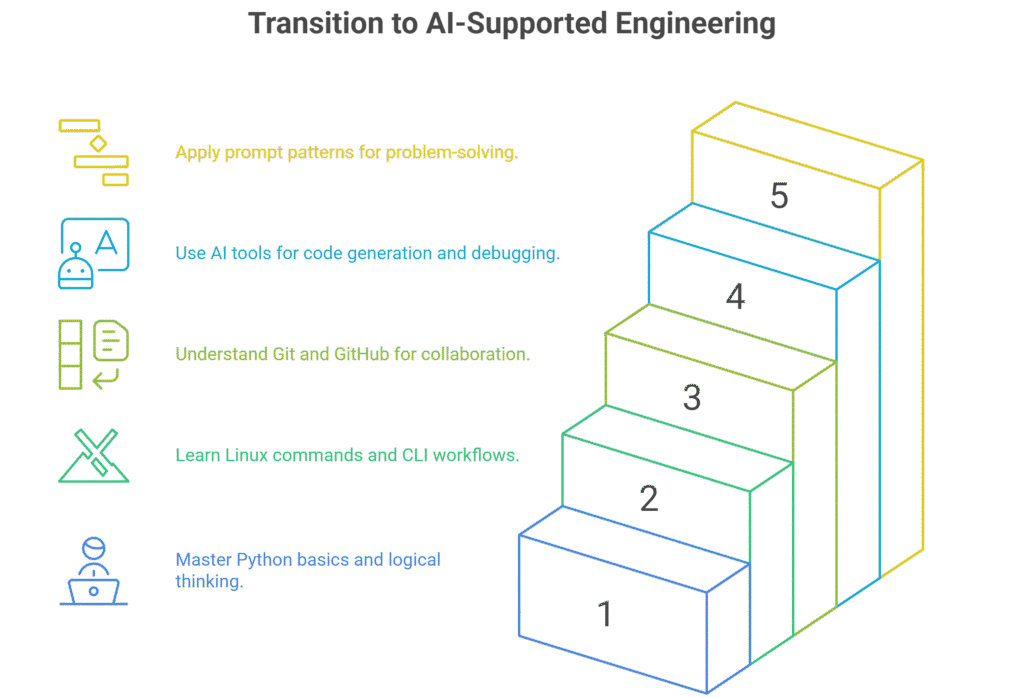
Python Fast-Track + Logical Thinking Reinforcement
Linux & CLI workflows with AI guidance
Git & GitHub collaboration with AI-generated commit summaries
AI Coding Assistants (Cursor / Copilot / Codeium):
Code scaffolding & boilerplate generation
Debug explanation & solution direction
Refactoring + optimization rewriting
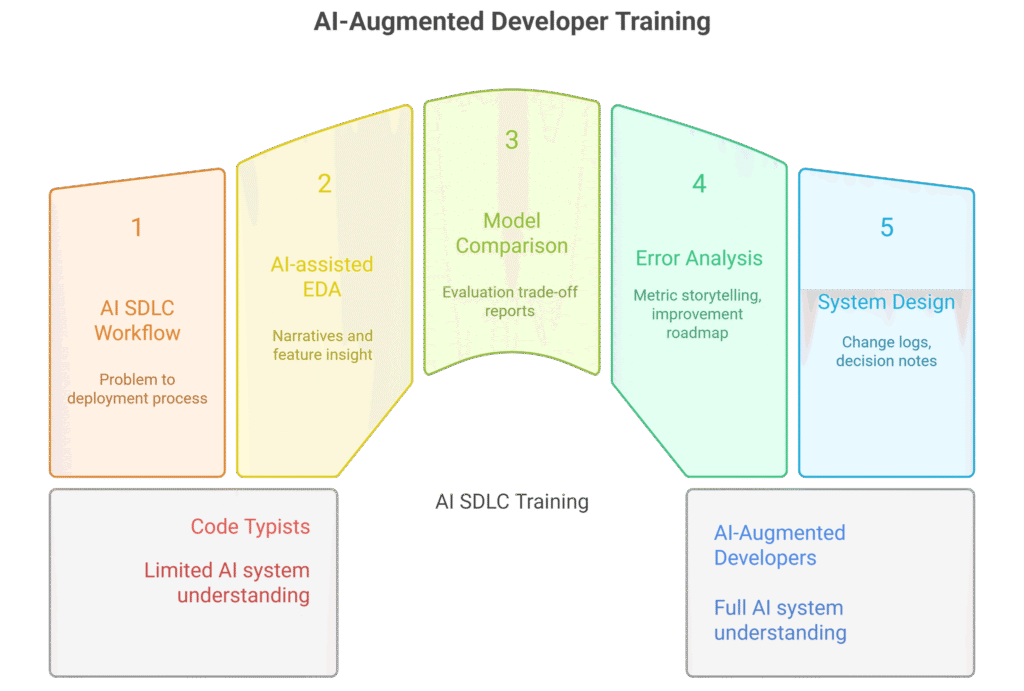
Students begin working as AI-Augmented Developers, not code typists.
Goal: Understand how full AI systems are designed, iterated, and justified.
AI SDLC Workflow:
Problem → Data → Model → Evaluation → Deployment
AI-assisted EDA Narratives & Feature Insight Interpretation
Model comparison reasoning + evaluation trade-off reports
Error analysis → metric storytelling → improvement roadmap
System Design Documentation:
Change logs
Decision justification notes
Architecture explanation prompts
Students gain technical explanation confidence — essential in real engineering teams and interviews.
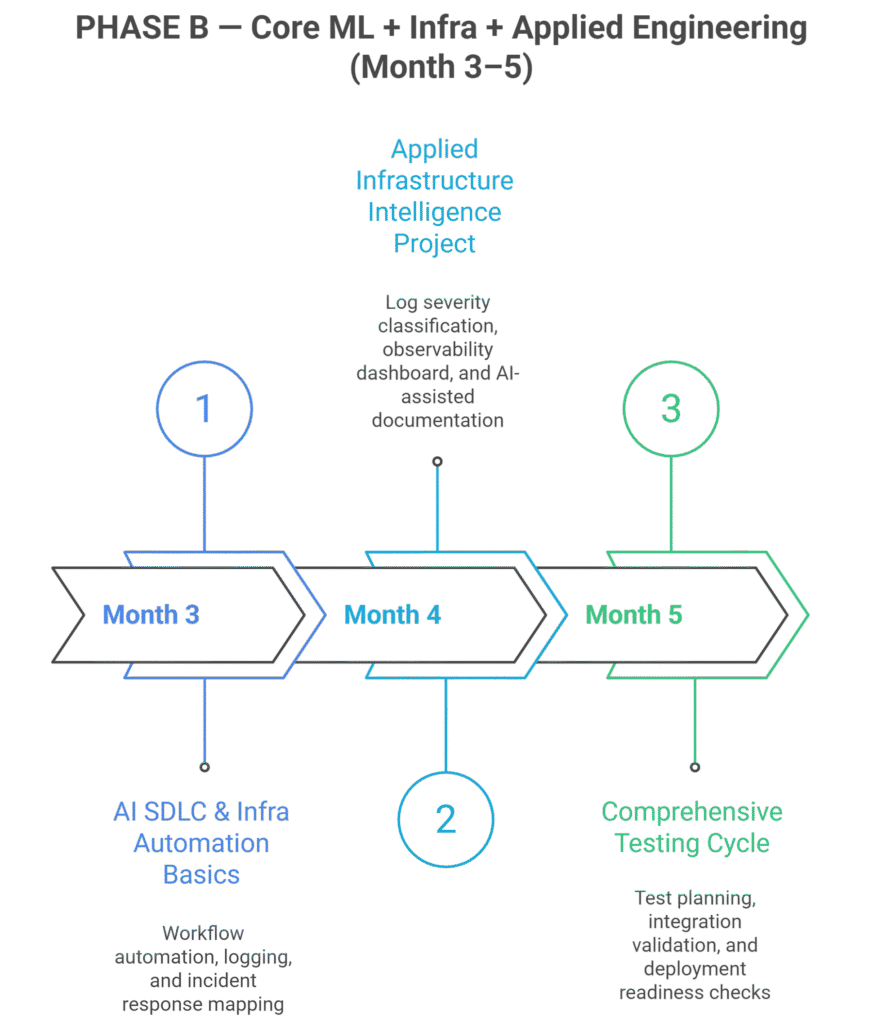
Workflow automation using Shell + Python
Logging & monitoring fundamentals
Incident → pattern → response analysis mapping
Log Severity Classification Model
Mini Observability Dashboard
AI-assisted technical documentation + peer code reviews
Integration + performance validation
Deployment stability & readiness check
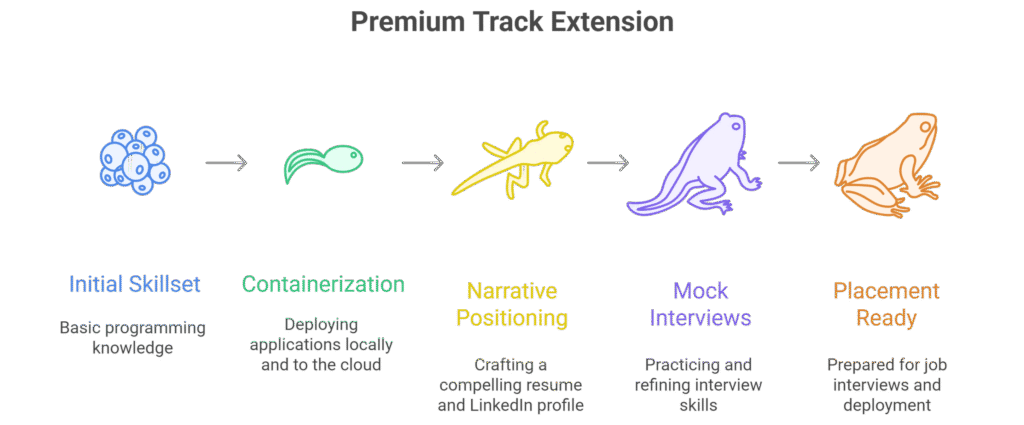
(Applicable for Premium Program Students)
Containerized deployment (local → cloud / VM)
Resume & LinkedIn narrative positioning
Mock interviews (recorded + graded scoring rubric)
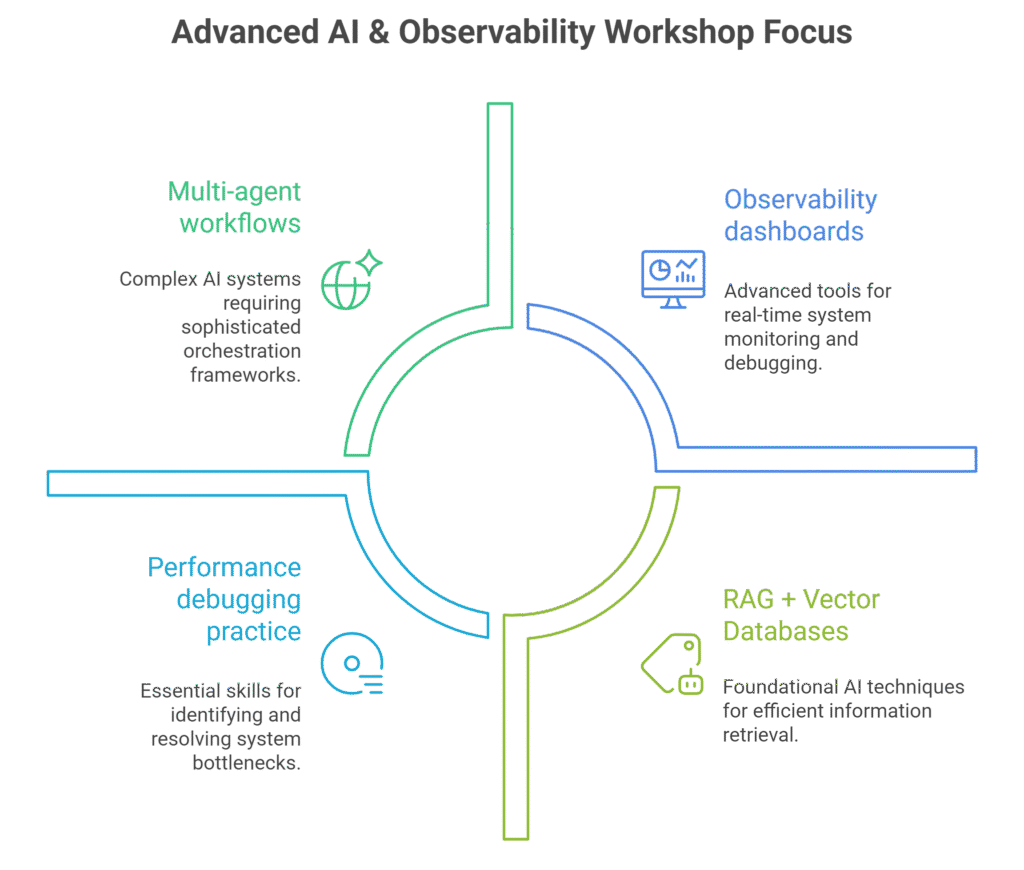
Multi-agent workflows & orchestration frameworks
Observability dashboards + performance debugging practice
This curriculum outline is provided for general guidance. Actual training content, project depth, sequencing, and delivery pacing may be modified by PSI faculty based on learner readiness and current industry requirements.